
Group Ketamine Therapy in Asheville: Inside the Magic of GroupKAP

A former systems analyst and a dance/movement therapist run a small-group ketamine program in Fairview. Their bet: the medicine works best in a room full of people, with mountains outside and no one doing it alone.
Photos: GroupKAP
I was a software engineer before I started Be Well Asheville, so when Ted Riskin, who runs group ketamine therapy in Asheville, told me he walked away from a systems analyst career to “debug people,” I leaned in. We spent about 40 minutes talking about ketamine, group healing, and why he doesn’t want anyone doing this work alone. His co-facilitator, Amy Borskey Duffer, joined us.
Ted is also the featured practice in our guide to ketamine therapy in Asheville, which GroupKAP sponsors. This spotlight goes deeper on the people behind the program.
Meet the Facilitators
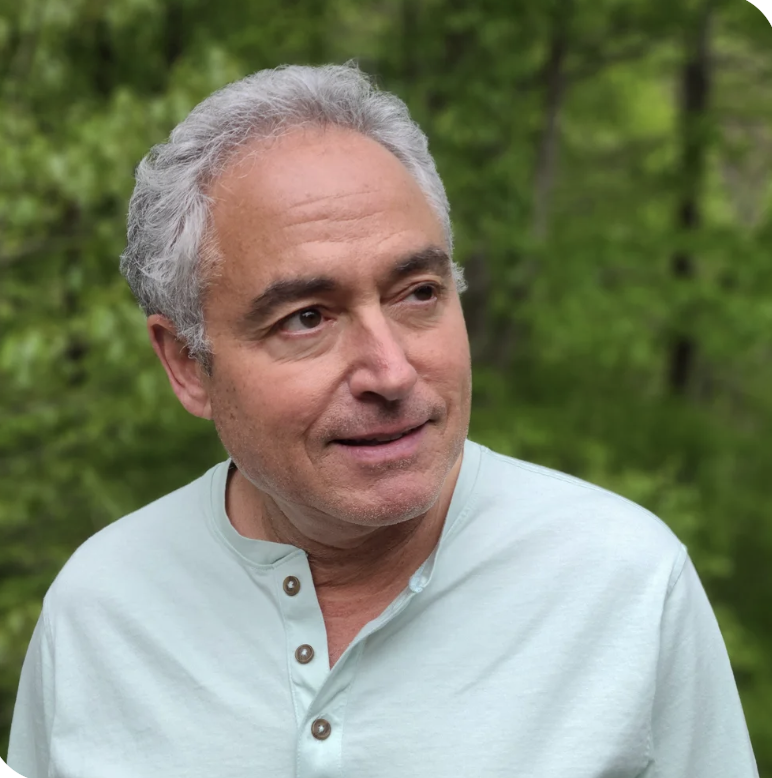
Ted Riskin, LCSW
Founder & Co-Facilitator
Ted has facilitated transformational group healing work and therapeutic process groups since 1994. His work integrates Internal Family Systems, Holotropic Breathwork, Core Energetics, and decades of experience supporting emotional healing, communication, and relational growth. Through GroupKAP, Ted offers trauma-informed ketamine-assisted psychotherapy within a supportive group setting focused on preparation, emotional safety, and psychedelic integration.
Learn more about Ted →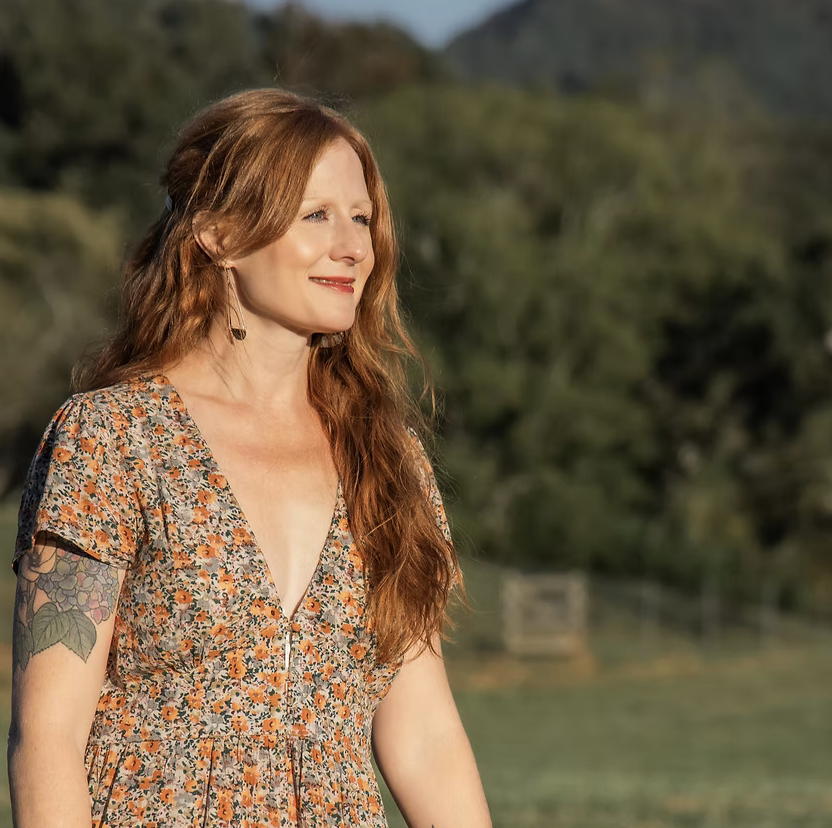
Amy Borskey Duffer, MA, LCAS
Co-Facilitator
Amy is a certified dance and movement therapist and licensed clinical addictions counselor with extensive experience supporting healing and integration work. She brings a grounded, compassionate presence to the group process and supports clients through preparation, exploration, and growth.
Learn more about Amy →No clinic waiting room. No IV pole. No going it alone.
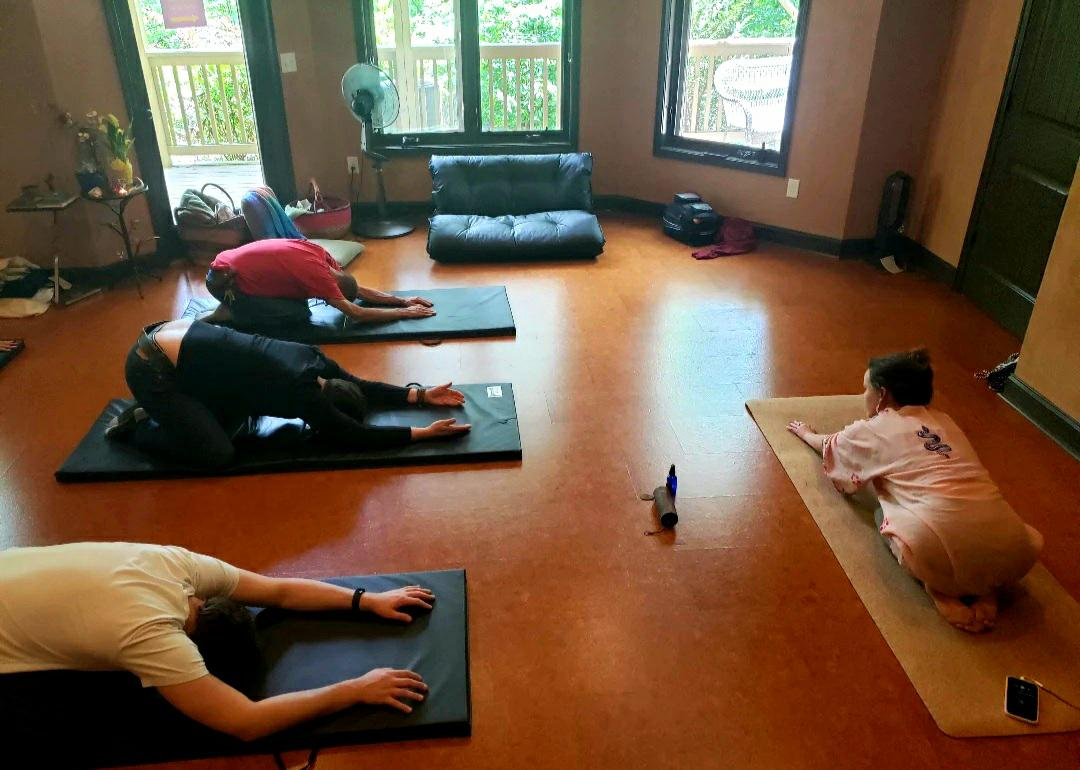
That’s the quick pitch for group ketamine therapy in Asheville at GroupKAP, a small-group program in Fairview, about 20 minutes from downtown. Participants gather on a heated cork floor ringed with floor cushions, mats, and blankets. The retreat space sits among mountain views, and the quiet comes with it.

Ted Riskin, LCSW, founded the program. He co-leads it with Amy Borskey Duffer, MA, LCAS, a board-certified dance/movement therapist. Together they pair ketamine with Internal Family Systems (IFS) therapy, time in nature, and a circle of other people doing the same work.
Their premise is simple. Ketamine makes the brain more open to change for a while. So what happens inside that window matters.
From Debugging Computers to Debugging People
Ted didn’t start in a therapy room. He started as a systems analyst.
“I found that quite engaging and interesting to debug computers,” he says. After a while, he decided it would be “much more fulfilling to debug people.”
His first approach as a therapist was cognitive: looking at what goes wrong in a person’s thought process. But he hit a limit fast. “I needed to expand and take the body into account and emotions into account,” Ted says, and “everything I’ve done since then has been to deepen the cognitive approach to the body and to spirituality.”
I get that pivot. I’ve come to think of consciousness as a kind of software: the system stays intact while new code gets written on top. I floated that idea to Ted, and he pushed back right away. “Actually, we think that the ketamine is changing the hardware.”
The résumé backs up the pivot. According to GroupKAP’s team page, Ted is certified in Holotropic Breathwork™ through Grof Transpersonal Training and has offered breathwork workshops since 1997. He has completed all three levels of Internal Family Systems training, and he has led therapeutic process groups continuously since 1994.
What Comes After the Medicine
Amy explains the medicine side. She points to ketamine’s effect on the brain’s glutamate system and to neuroplasticity, the brain’s ability to form new connections. Researchers are still working out the details, and our ketamine therapy guide covers the science, costs, and side effects.
Ted cares more about what you do with that open window. He wants to use it “to offer experiences that can rewire the brain in positive ways,” and he names three: nature, community, and the body.
Then comes the twist most people don’t expect. GroupKAP isn’t trying to get rid of depression or anxiety.
“We want to teach people how to welcome these parts, how to have compassion for them, how not to be afraid of them. And how to help them, rather than trying to banish them with a drug.”
— Ted Riskin, LCSW, GroupKAP
That comes straight from IFS. The IFS Institute describes the model as a way of seeing each person as a system of protective and wounded inner “parts,” guided by a core Self. “In IFS, the motto was all parts are welcome,” Ted explains, “so that includes depressed and anxious parts.”
The same idea shapes the prep. Before anyone takes the medicine, the group checks in with every part. “Sometimes people have a very gung-ho part to do a process,” Ted says, “and they don’t want to listen to the parts that are afraid or don’t want to do it.” So participants ask all their parts for consent first.
Trust the Inner Healer
GroupKAP’s format didn’t appear out of nowhere. “The model of how we’re doing group [KAP] came out of holotropic breathwork,” Ted says. He has practiced it since 1997. (Curious about the practice itself? Our guide to breathwork in Asheville maps the local options.)
The biggest lesson from that tradition is restraint. Facilitators don’t steer. They trust what Dr. Stanislav Grof called the inner healer. This approach has informed psychedelic therapy since then, most notably the decades of MDMA research sponsored by the Multidisciplinary Association for Psychedelic Studies (MAPS). MAPS researcher Michael Mithoefer describes Grof’s influence here.
“Whenever I’ve had a great idea of how to intervene in someone’s session, and I didn’t do it, my sense was that wherever they went was better than where I would have sent them.”
— Ted Riskin, LCSW, GroupKAP
Restraint has limits, though. Ted has watched people in breathwork sessions fall into loops, doing the same thing every time. So he blends two instincts: watching and trusting, plus knowing “where an intervention might help.”
IFS supplies the discipline. Much of the practice, Ted says, is learning to stay in “Self-energy” as the facilitator, so every intervention comes from there.
Why a Room Full of People
Amy and Ted have a theory about why depression and anxiety feel so isolating. Growing up, most of us absorb some negative messages and build an inner critic to keep ourselves in line. Then we assume everyone else sees us through the critic’s eyes. So we hide, skip the risks, and end up more alone.
A group interrupts that loop. Everyone in the room chose to be there, and everyone is looking inward. “The people are always just wonderful, and humble, and kind,” Ted says.
“I don’t have to impress them, I don’t have to be smart, I don’t have to be entertaining, I can just be, and people want to connect with me.”
— Ted Riskin, LCSW, on what participants discover, GroupKAP
Amy adds the relational piece. A lot of the pain people carry started in a relationship, so “to repair, we need to do that in relationship.” Individual therapy helps, she says, but a group lets people work through friction “in real time, and not run from it.” She also hears the same thing after sessions: people tell her they could sense the others in the room. Ted adds that when clients with a negative self-image find acceptance from an individual therapist, they are likely to decide, “Well, they’re nice to me because I’m paying them.”
Ted also sees an older logic at work. “The idea that you would do it by yourself is just weird,” he says of how humans have used altered states through the millennia. “I don’t believe we’re meant to journey alone. I believe we’re meant to journey in community.”
And the culture around us isn’t helping. “Now you see people turning to chatbots to be their friend,” Ted says, and for some, “their closest relationship is with an algorithm.” I run a media company that leans hard on AI, so I’ll say this plainly: he has a point.
Nature Does Part of the Work
Amy explains how the nature piece fits in. Modern life pulls most of us away from the outdoors, she says, and that matters. When people spend more time outside and stay connected to natural rhythms, she argues, they tend to feel less depressed, less stressed, and less anxious.
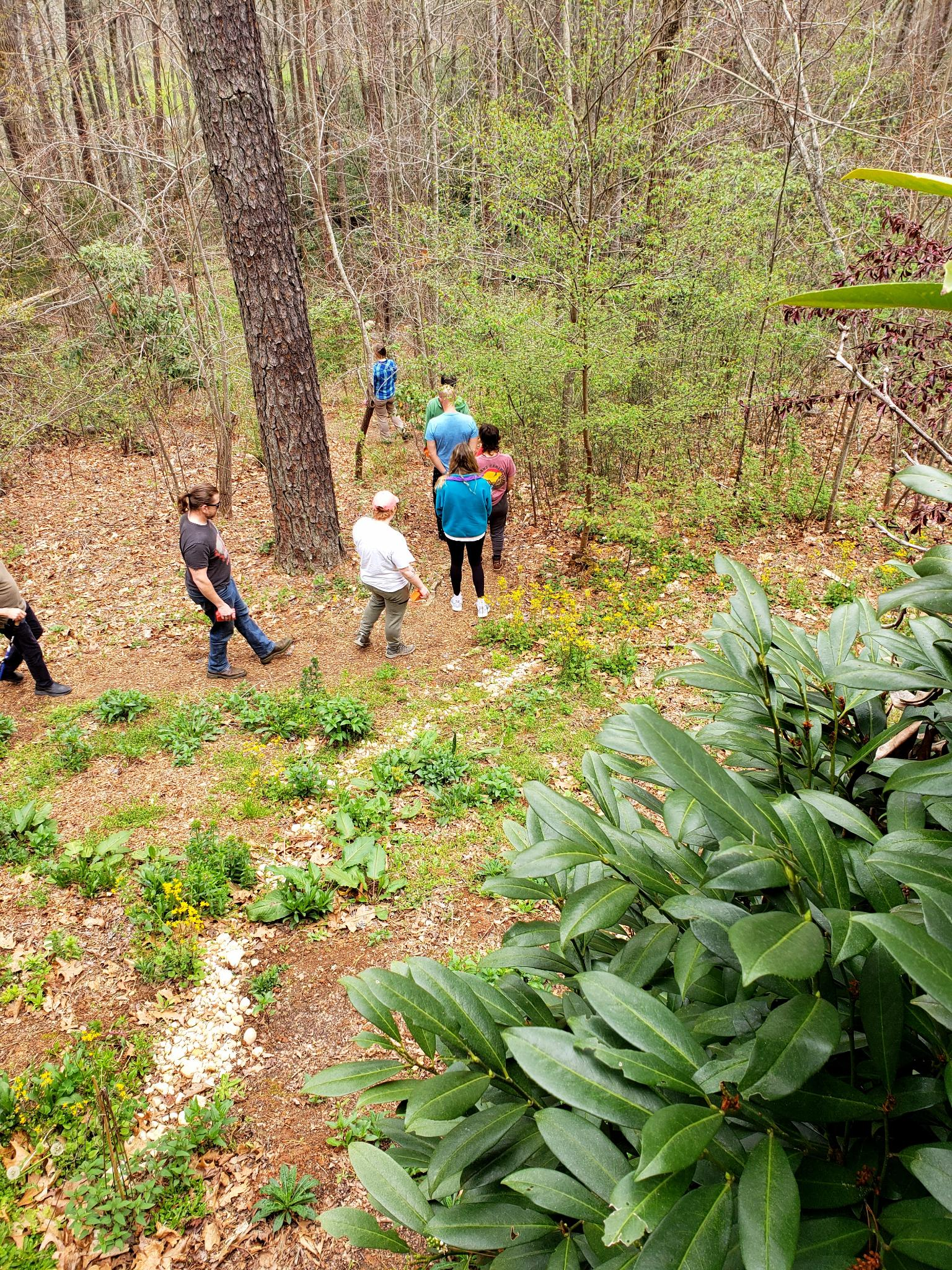
The broader research points the same direction. A 2019 study of nearly 20,000 people in England, published in Scientific Reports, found that people who spent at least 120 minutes a week in nature were significantly more likely to report good health and high wellbeing. It’s an association, not proof of cause, but it’s a large one. Read the study.
At GroupKAP, nature gets built into the schedule. After the medicine, Amy says, participants head outside, sometimes down to the creek, for prompts and reflection. How have I been disconnected? How does this feel in my body? She keeps it honest, too: “not everybody likes being outside either.” Ted sometimes quotes Woody Allen: “I love nature. I just don’t want to get any of it on me.”
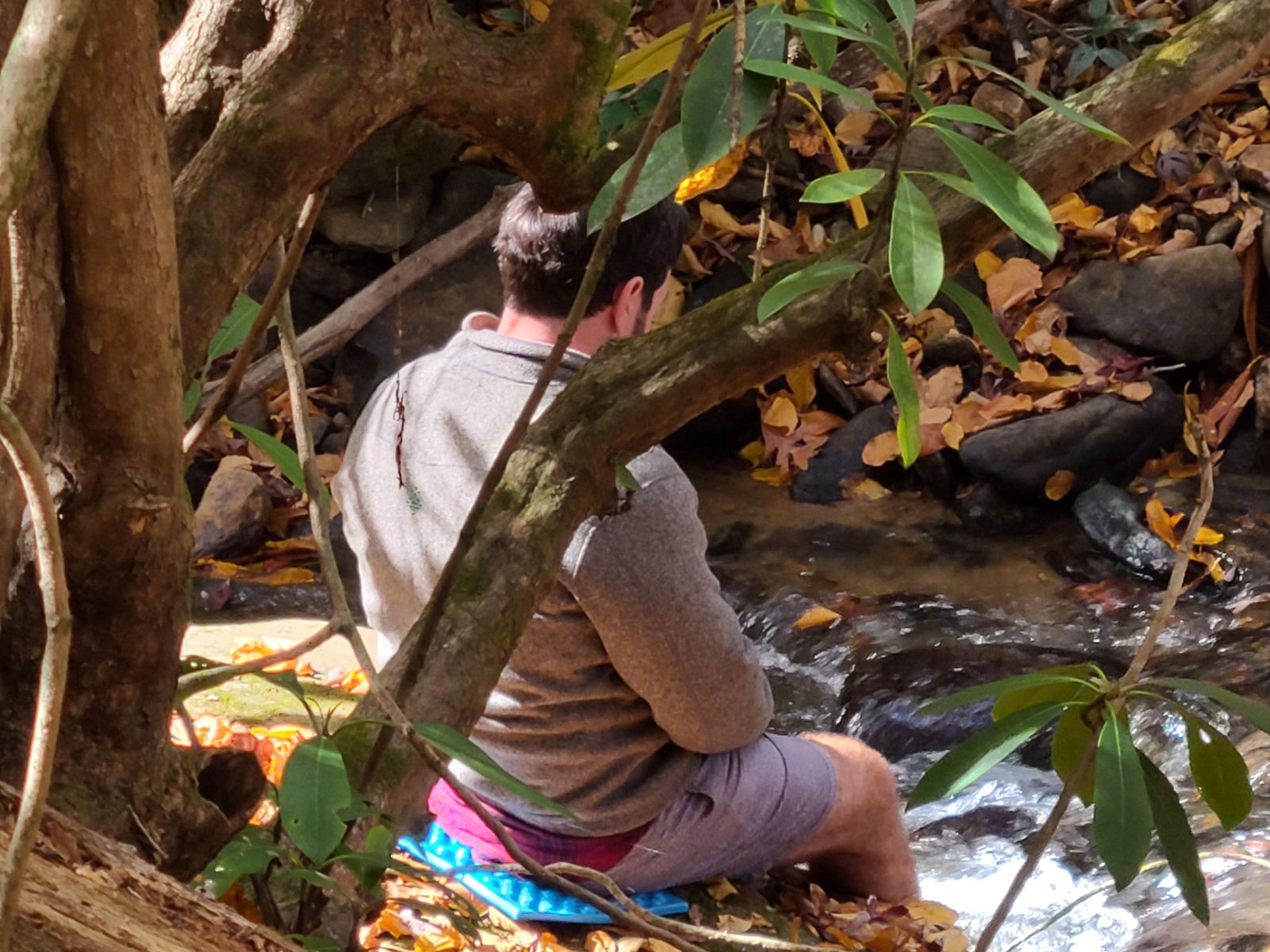
Ted has his own nature story. He drove into town early one Sunday morning during the recent Harvest Moon, came down a hill, and saw the mountains with the giant, bright moon hanging over them. He couldn’t say why it hit him so hard. His best guess: “an openness to be impacted.” He compared it to an IMAX film, then decided the drive had more impact.
What a Cohort Actually Looks Like
Here’s the part people ask me about most: what happens when you show up?
First, you apply. GroupKAP’s process includes a screening consult with the facilitators, then a screening with the program’s physician. GroupKAP’s team page lists Dr. Zak Foy, a board-certified emergency physician with more than a decade of experience using ketamine as an anesthetic in clinical settings, as medical supervisor.
Then the cohort begins. The first two meetings happen online, in the evening. On night one, everyone meets, Amy and Ted cover ketamine basics, and Ted starts teaching IFS. Night two focuses on intention-setting and practical prep: what to eat, drink, wear, and bring. Participants also do more parts work with the medicine in mind.
Dates, Times, and Cost
- Virtual orientation: Monday, October 19 and Wednesday, October 21, 7:00–9:00 pm
- In-person workshops (Fairview): Sunday, October 25, Tuesday, October 27, and Thursday, October 29, 9:30 am–4:30 pm
- Virtual integration session: Wednesday, November 4, 7:00 pm (one to two hours)
- Cost: $1,650. The $1,500 early-bird price ended October 3, 2026.
Facilitated by Amy Borskey Duffer and Ted Riskin. Confirm dates and pricing at groupkap.com/schedule before you apply.
The in-person days each follow the same rhythm. Everyone gathers in the morning for an opening circle and checks in, which gives them a chance to notice which parts showed up. This is also a time when anyone is welcome to bring up an issue for IFS processing. In addition, on the second and third day, participants are invited to safely express anger physically, which Ted says seems to provide a clearer channel for the medicine to work. Of course, any participation in this activity is optional. Then comes the medicine session, with two hours set aside.
Ted and Amy ask people to keep their attention inward for the first hour. The second hour is optional. Some people stay inside, and some journal, step outside, or use EMDR tappers. Amy brings oracle and medicine card decks for anyone who wants to explore with them.


After lunch, the group does an integration activity. That might mean a walk to the creek, an embodiment exercise Amy leads, or Soul Collage. Then comes the closing stretch. Ted says the group spends up to two hours at the end of the day working with parts inside the IFS model, with a chance “to actually do work.” The ketamine, he says, “potentiates that process.”
| 9:30 | Arrive |
| 9:45 | Opening circle |
| 10:45 | Ketamine session and integration |
| 12:45 | Lunch |
| 1:30 | Integration activity (movement, nature, Soul Collage, and more) |
| 2:30 | Sharing circle |
| 4:30 | End (people who want to stay longer can) |
Source: GroupKAP’s October cohort schedule.
About a week later, the group meets once more online. The question that night: how do we keep benefiting from the changes? As Ted puts it, how can participants “get the most out of the shifts that are happening”? What do people need to feel complete with the process?
Amy also mentions one practical difference. The ketamine session is much shorter than the experiences people have with psilocybin, MDMA, or LSD. Ted calls it “easier on the body” and “easier on the psyche, too.” That’s their read, and it’s worth discussing with any provider and your own doctor.
Watch: Ted’s “Overview of our Group Ketamine Assisted Psychotherapy program,” posted to his YouTube channel in June 2023. The team has changed since then, so check GroupKAP’s team page for current facilitators.
What the Numbers Show (and What They Don’t)
GroupKAP doesn’t just rely on stories. Participants fill out questionnaires before and after each cohort. The main one is the DASS-21, a short, widely used scale that measures depression, anxiety, and stress. The team also uses a Self-Leadership Scale, which Ted describes as “basically the goal of IFS therapy.” They tracked nature relatedness too, then dropped it because it was “not telling us anything interesting.”
The headline result, from Ted’s own tabulation of the 54 participants who agreed to participate in the research:
Average combined depression, anxiety, and stress score (DASS-21). Lower means fewer symptoms.
That’s a drop of roughly 60 percent. Ted calls the reduction “phenomenal.”
Now the caveats, because they matter. These are self-reported scores from GroupKAP’s own program. There’s no control group, and no independent review. Ted also told me several recent cohorts haven’t been tabulated yet. Treat the numbers as an encouraging internal signal, not a clinical finding. For context on how the treatment landscape compares, including costs and evidence, see our Asheville ketamine guide.
Who It’s For, and Who Should Ask More Questions
GroupKAP says its program is for adults 18 and older without specific contraindications for ketamine therapy. The team pitches the group format as a lower-cost route into ketamine-assisted psychotherapy than individual sessions. Whether group ketamine therapy in Asheville fits you depends on your health history, and that’s what the screening steps are for.
Ketamine isn’t right for everyone. Talk with your psychiatrist or primary care provider first, and read the side effects and “who it’s not for” sections of our guide before you apply.
One Thing to Try Before You Apply
I asked both of them for one simple thing a reader could do today, even before signing up for anything. Ted answered first.
If you’re blaming yourself, or turning your inner critic up for whatever is happening in your life, try to let that go. “Everyone’s on a different journey,” he says, “and they didn’t do anything wrong and life can be hard.”
I told Ted on the call that everyone needs to be told that. I still think so.
Ready for the next step? 👉 Apply for an upcoming GroupKAP cohort.
Follow GroupKAP on Instagram @groupkap | groupkap.com | tedriskin.com
GroupKAP, 81 Log Gap Road, Fairview, NC 28730
Frequently Asked Questions About GroupKAP
This article is for informational purposes only. It is not, nor is it intended to be, a substitute for professional medical advice or treatment for specific medical conditions. Ketamine is a prescription medication that isn’t appropriate for everyone. Always consult a qualified healthcare provider before starting any treatment. Outcome data in this article comes from GroupKAP’s own program records and has not been independently reviewed. This article may be community-supported. Learn how to get your wellness business featured here.
