
The Complete Guide to Somatic Therapy in Asheville, NC [2026]

Last updated: May 1, 2026 | Asheville, North Carolina
JUMP TO: Featured Asheville Somatic Therapists
Table of contents
- My Personal Experience with Somatic Therapy
- Introduction: Finding Balance Through Somatic Therapy in Asheville
- What Is Somatic Therapy and How Can It Help You?
- Does Somatic Experiencing Work?
- Why Asheville Is a Premier Destination for Somatic Therapy (and wellness in general)
- Featured Asheville Somatic Therapists
- Somatic Therapy Techniques
- Somatic Experiencing® (SE)
- Other Wellness Practices That Complement Somatic Therapy
- Making Your Choice Feel Personal
- Embracing Your Path in Somatic Therapy
- Frequently Asked Questions
- Resources & Further Reading on Somatic Therapy
Disclosure: Building this guide takes time, research, and heart. We're grateful to the local
practitioners who've partnered with us to make it possible. Their community support
keeps this resource free and helps us spotlight the incredible healing work happening
in Asheville. All featured providers are vetted for credentials and client satisfaction.
Key Takeaways
- Somatic therapy works through the body — it helps release stored stress, trauma, and tension that talk therapy alone often can't reach.
- Asheville's healing culture, mountain setting, and concentration of trauma-trained practitioners make it one of the best cities in the Southeast for this work.
- Skyler Wilds offers Hakomi-inspired somatic therapy and Dynamic Body Work from an East Asheville studio, with virtual options.
- Somatic Experiencing®, Hakomi, CranioSacral therapy, and somatic massage are among the most evidence-informed local approaches.
- Intro sessions typically start around $55–$75; you don't need a trauma diagnosis — insomnia, chronic pain, and burnout all respond well.
My Personal Experience with Somatic Therapy
Back in 2012, I sat in massage therapy school with no idea that one session would change everything. I signed up for a shamanic and Reiki healing experience as part of my training. What happened that day stayed with me forever.
First, I noticed the room felt different. The practitioner had carefully arranged feathers, stones, and crystals around the space. Right away, I felt a quiet sense of intention in the air. I knew this would not be a typical afternoon.
Then, the practitioner asked me to bring up an early painful memory. I thought about my parents' divorce — the grief, the confusion, and the helplessness I had carried since childhood. Instead of just talking about it, I breathed into it. The breathwork was specific and purposeful. It began to loosen something deep inside me that I had held tightly for years. Tears started flowing.
Next came the session's most powerful moment. Four therapists surrounded me and held the space with their full presence. They encouraged me to release the anger of my younger self — the anger I had never felt safe enough to express. Because they held me so firmly and so lovingly, I finally let go. What came out of me that day surprised me with its depth and its relief.
Finally, the session ended in stillness. I lay on the table feeling open, raw, and somehow more whole. It was one of the most profound experiences of my life. In short, my body told me what my mind had long avoided — that healing is possible when safety, presence, and care come together.
As a result of that day, I carry this experience with me. It showed me firsthand what it means to meet someone in their deepest pain and walk with them toward release. This is what somatic therapy can do for others, and it's why I'm so excited to show you the experts in Asheville who can perform this type of powerful work.
I hope you enjoy this guide and all of the other wellness guides we will be producing in 2026 and beyond.
Travis Richardson
Founder & Editor-in-Chief, Be Well Asheville, LLC
Introduction: Finding Balance Through Somatic Therapy in Asheville
If you've done the therapy, read the self-help books, and still find yourself lying awake at 2 a.m. with a clenched jaw and a nervous system that won't quit, you may just need a different entry point into healing. For a growing number of Asheville residents, that entry point is the body itself.
Somatic therapy in Asheville has expanded well beyond niche wellness circles. Trauma-informed bodywork, nervous system regulation, and body-based modalities are now sought by professionals, parents, veterans, and anyone who suspects their stress is living somewhere deeper than their thoughts. Asheville's integrative health community has responded with some of the most skilled somatic practitioners in the South.
This guide covers what somatic therapy is, why Asheville is uniquely suited for it, and which local practitioners might be right for you.
What Is Somatic Therapy and How Can It Help You?
"Somatic" comes from the Greek word soma, meaning body. Somatic therapy is an umbrella term for body-centered approaches that recognize the nervous system as a primary site of healing. Rather than processing experiences solely through narrative and insight, somatic work engages the body directly through breath, movement, touch, sensation tracking, and present-moment awareness.
The science behind it is grounded. Psychiatrist Bessel van der Kolk's foundational research and Dr. Peter Levine's development of Somatic Experiencing® showed that unresolved stress and trauma get encoded in the body's tissues and autonomic nervous system. Dr. Stephen Porges' Polyvagal Theory explains why we can't simply think our way out of a dysregulated state — the nervous system needs safety signals it can feel.
| Condition / Concern | How Somatic Work Helps |
|---|---|
| Chronic stress & burnout | Downregulates the sympathetic nervous system |
| Insomnia & sleep disruption | Restores parasympathetic tone; reduces hyperarousal |
| Anxiety & trauma / PTSD | Processes stored survival responses safely |
| Chronic pain | Addresses myofascial tension and psychosomatic patterns |
| Depression & dissociation | Rebuilds interoception and felt sense of aliveness |
Does Somatic Experiencing Work?
Short answer. YES!
Listen to this talk by Monica LeSage at TEDxWilmingtonWomen to understand how Somatic Experiencing, developed by Peter Levine, helps release trauma by working with the body rather than just retelling painful stories.
It offers simple, practical techniques you can use immediately to regulate your nervous system, reconnect with safety, and prevent stress from getting stuck in your body.
Why Asheville Is a Premier Destination for Somatic Therapy (and wellness in general)
Asheville has long drawn healers, seekers, and practitioners who want to work in an environment that mirrors integrative medicine's values. Nestled in the Blue Ridge Mountains on land with deep Cherokee cultural and healing traditions, the city carries a palpable sense of place that has shaped its wellness community. The proximity to nature, the slower pace of life, and Asheville's long history of honoring mind-body practices have made it fertile ground for somatic work.

The concentration of trained practitioners here is remarkable for a city of its size. You can find integrative somatic practitioners and somatic bodywork specialists throughout the city, and the growing national trend in somatic practices has found one of its richest local expressions right here in the mountains.
Featured Asheville Somatic Therapists
Finding Your Expert in Somatic Therapy
When choosing a somatic therapist, first look for someone with formal training in body-based modalities such as Somatic Experiencing, Sensorimotor Psychotherapy, or trauma-informed nervous system work.
Additionally, pay attention to whether they emphasize safety, consent, and gradual pacing, because effective somatic therapy focuses on regulation rather than emotional overwhelm.
Finally, trust your felt sense during an initial consultation — if your body feels grounded, respected, and not rushed, that therapist is likely a good fit.
Spotlight on Asheville's Experts
Skyler Wilds (Dynamic Body Work & Somatic Therapy)
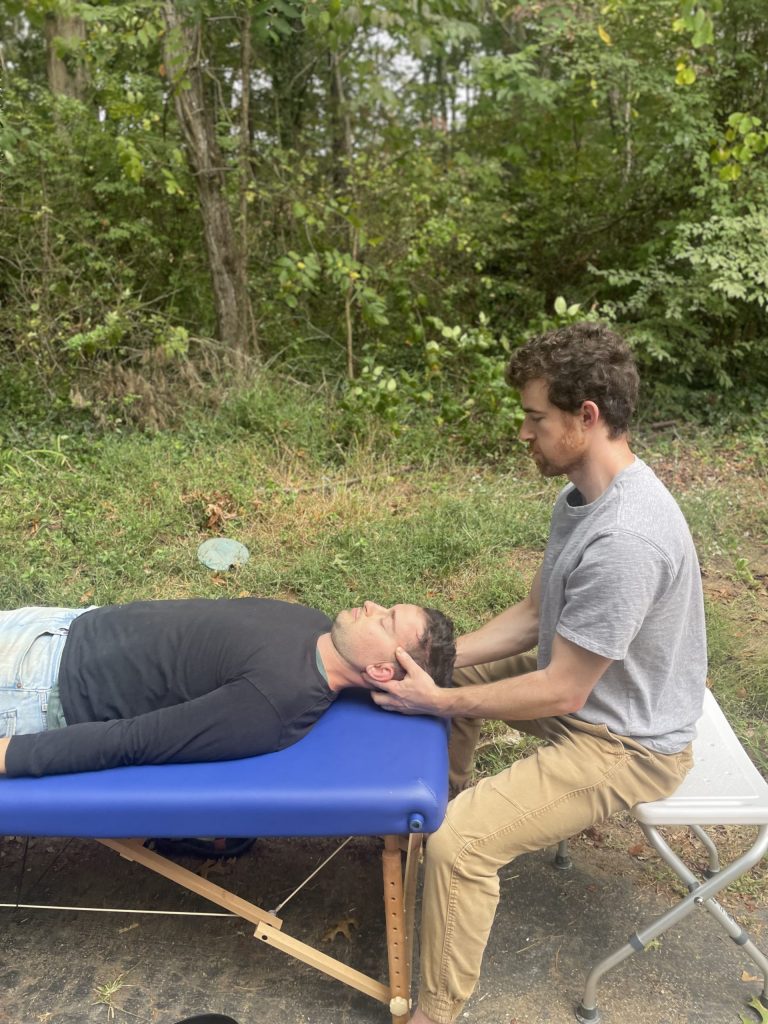
I offer mindfulness-based somatic therapy rooted in the Hakomi method, a gentle, powerful approach that helps integrate both acute and developmental trauma. Using body awareness, emotional attunement, and unconscious parts work, we create space for deep insight and nervous system re-education.
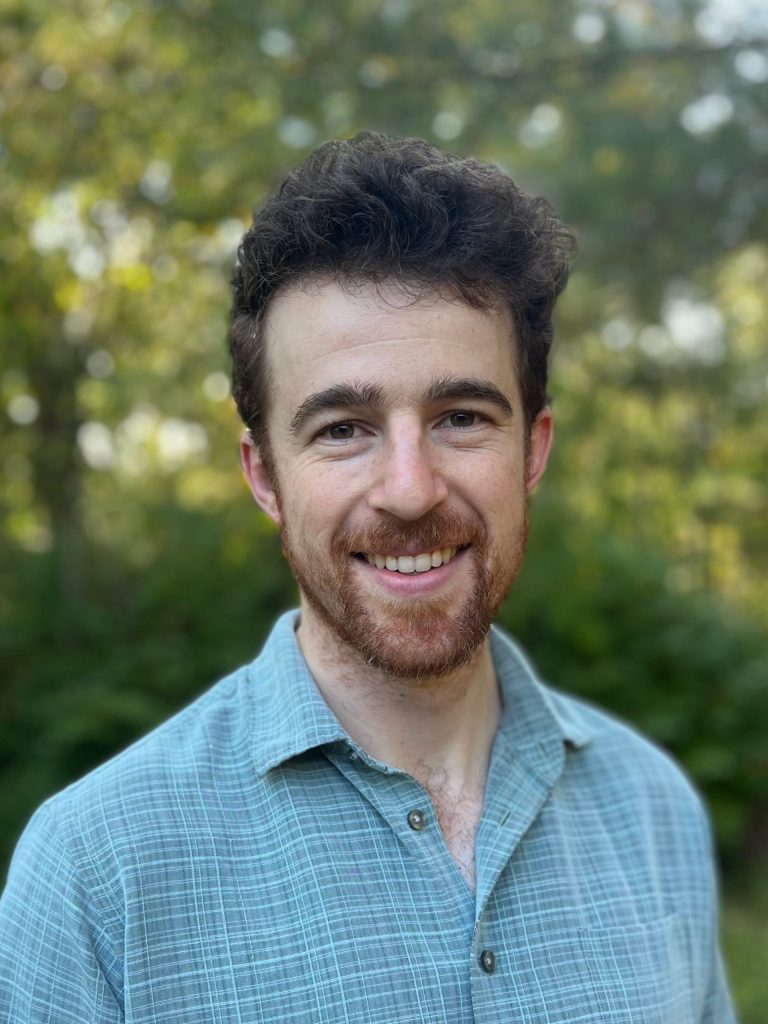
This collaborative process invites us to slow down, uncover core material, and begin forming new ways of being and relating.
It supports resilience and the development of choice, helping rebuild a trustworthy connection to self and others.
Whether you are navigating a specific life challenge or a longer-standing pattern, this work meets you where you are and honors your unique pace and process.
Over time, many people find that healing extends beyond symptom relief, opening into a fuller, more embodied sense of aliveness and possibility.
Karallyn Streit (Somatic Embodywork)

Somatic Embodywork provides nervous system–focused healing in Asheville, supporting women experiencing anxiety, chronic stress and pain, and emotional overwhelm.
Through somatic and body-based therapies, Karallyn helps clients regulate their nervous systems, release stored tension, and restore a sense of safety, grounding, and presence.
Somatic bodywork sessions include Somatic Experiencing®, SE Touch, CranioSacral therapy, myofascial release, and energy-based healing, which are intuitively integrated based on each client’s unique needs. Karallyn's work is designed to support long-term regulation, resilience, and reconnection to self.
Charles Wu (Ecstatic Somatics)
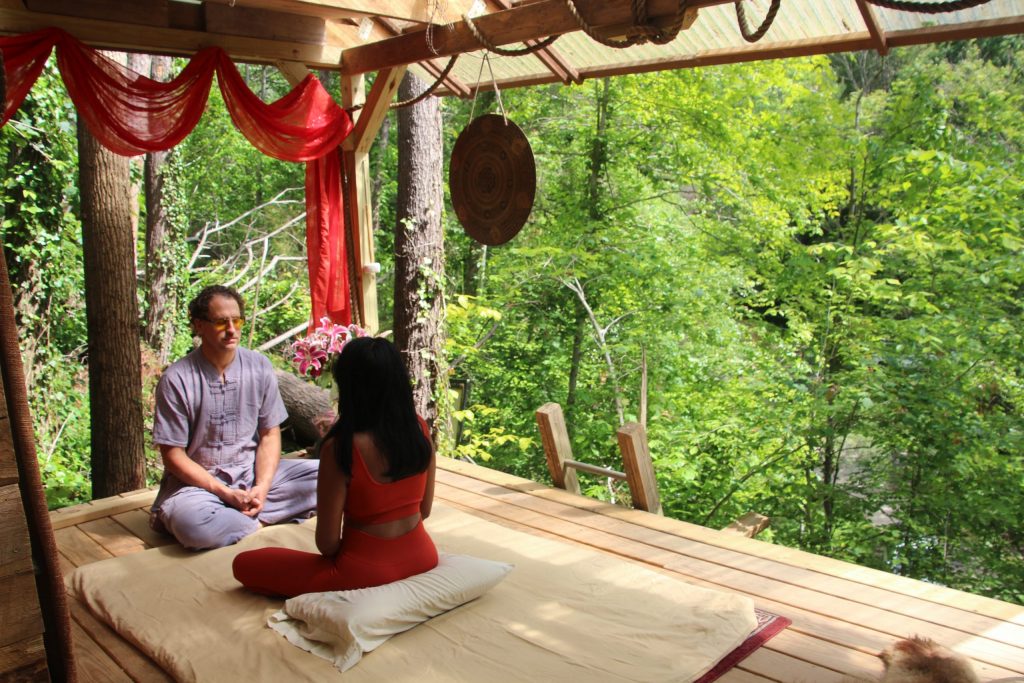
Charles is a Thai/Shiatsu bodyworker. His style focuses on moving energy along meridians, treating heaviness, pain, and stuck energy in the body. He works on the floor using stretching, rocking, deep pressure, and energetic holds.
Charles also incorporates cupping, massage tools, acupressure, and abdominal work.
You can work with him in your home, at his downtown office, or in his favorite spot, a treehouse in North Asheville. Charles wanted to let you know..."Be well, Asheville!"
Karina Duffy (Community Healing Sanctuary)
Karina is a Trauma & Grief Release Healer trained at the Trauma Resource Institute as a Trauma Release Practitioner and at the Grief Recovery Institute as a Grief Recovery Specialist. She is also a Reiki & Somatic Healer, Intuitive Reader, Sound Healer, Life Coach, and Animal Communicator & Healer.
A native of Dublin, Ireland, Karina carries intuitive wisdom passed down through her Celtic grandmother’s lineage—an ancestral thread of healers and seers deeply connected to nature, spirit, and the unseen realms. This inherited intuitive knowledge informs the way Karina works: with deep listening, reverence for the body’s intelligence, and a gentle trust in the healing process.
Other Somatic Therapy Experts
Leslie Brooks: Trauma Coach, Somatic Experiencing Practitioner (South Asheville)
Brown Mountain Bodywork (East Asheville)
Gilian Hailey, Rebecca Butler (Downtown Asheville)
Somatic Therapy Techniques

Somatic Experiencing® (SE)
Developed by Dr. Peter Levine, SE tracks body sensations to gently complete interrupted survival responses stored in the nervous system. Practitioners guide clients to notice internal states — not to relive trauma, but to allow the body's natural resolution cycles to finish. SE is widely used for PTSD, chronic anxiety, and stress-related disorders.
The Hakomi Method
Hakomi uses mindfulness, present-moment body awareness, and compassionate inquiry to explore unconscious patterns beneath behavior. Practitioners offer gentle "experiments" — invitations to notice what arises in the body with a particular posture or breath — to surface and transform beliefs held somatically.
CranioSacral Therapy
This light-touch modality works with cerebrospinal fluid rhythm along the spine and skull to release deep restrictions in the nervous system. It's especially effective for chronic pain, migraines, and profound dysregulation — and many people describe dropping into rest they haven't accessed in years.
Somatic Massage & Integrative Bodywork
Somatic bodywork brings trauma-informed awareness to hands-on massage, pacing sessions to what the nervous system can receive — not just what tissue can tolerate. Modalities like myofascial release, Thai massage, acupressure, and deep tissue are applied with a somatic lens.
Comparison: Types of Somatic Therapy & Their Applications
| Modality | Core Approach | Best For | Session Style | Touch Level |
|---|---|---|---|---|
| Somatic Experiencing® (SE) | Tracks body sensations to gently complete interrupted survival responses. Uses titration — moving in small doses toward difficult material so the nervous system can discharge stored energy without overwhelm. | PTSD & trauma recovery, chronic anxiety, shock & accident trauma, stress-related illness | Talk + body awareness tracking | Minimal to none |
| Hakomi Method | Combines mindfulness and compassionate inquiry with gentle body experiments. Practitioners invite the client to notice what arises physically in response to a word, posture, or touch — then explore what that reveals. | Attachment & relational wounds, unconscious behavioral patterns, emotional numbness, identity & self-worth work | Mindfulness + dialogue + body experiments | Minimal, intentional |
| CranioSacral Therapy (CST) | Uses an extremely light touch along the skull, spine, and sacrum to sense and release restrictions in the craniosacral rhythm, calming deep tension in the nervous system. | Migraines & chronic headaches, nervous system dysregulation, insomnia & hyperarousal, chronic pain & fibromyalgia | Hands-on bodywork, mostly silent | Very light |
| Dynamic Body Work (DBW) | Blends assisted stretching, resistance flexibility, Feldenkrais activations, and Dynamic Body Balancing™ to restore mobility, relieve chronic tension patterns, and rewire habitual holding in the body. | Chronic pain & tension, mobility & posture, post-injury recovery, somatic + physical integration | Movement-based, assisted bodywork | Active hands-on |
| Somatic Massage & Integrative Bodywork | Applies myofascial release, Thai massage, acupressure, deep tissue, cupping, and trigger point therapy with a trauma-informed lens — pacing to the nervous system's readiness, not just muscle mechanics. | Muscle tension & chronic pain, burnout & stress, embodiment & body awareness, general nervous system care | Therapeutic massage with somatic awareness | Full bodywork |
Other Wellness Practices That Complement Somatic Therapy
Asheville's wellness community understands healing is multifaceted.
Trauma-informed yoga builds interoception and teaches you to track sensation gently — a natural complement to formal somatic sessions. You'll find several practitioners who blend movement and somatic awareness in the Be Well Asheville directory.
EMDR works alongside somatic approaches for trauma processing, particularly for clients also in talk therapy — the two modalities reinforce each other.
Breathwork and meditation deepen the capacity for present-moment body awareness that somatic sessions build, and serve as daily regulation tools between appointments.

Community healing circles and sound healing — like the monthly events at Community Healing Sanctuary — offer a low-barrier entry into nervous system work. The Be Well Asheville podcast with Leslie Brooks is also a rich resource for exploring integrative wellness locally.
Clearing Up Common Misconceptions
Myth: Somatic therapy is just massage.
Fact: While touch may be involved, somatic therapy engages the nervous system, emotions, and body simultaneously. According to Verywell Mind, it encompasses breathwork, movement, vocalization, and grounding — not simply bodywork.
Myth: You need a trauma diagnosis to benefit.
Fact: Chronic stress, burnout, insomnia, and general disconnection from your body all respond to somatic approaches — no formal diagnosis required.
Myth: Somatic work means reliving painful memories.
Fact: Skilled practitioners work at the edge of activation, not in overwhelm. The goal is regulated, titrated processing — not re-traumatization.
Myth: Results take years of sessions.
Fact: Many clients notice meaningful shifts in nervous system tone, sleep, and emotional regulation within their first few sessions.
Making Your Choice Feel Personal
Finding the right somatic practitioner is about fit as much as credentials.
Before booking, ask:
- What somatic modalities do you practice, and what training do you have?
Deep experience helps when you are unearthing stuff.
- How do you approach sessions for clients with complex trauma histories?
You want someone who is compassionate and skilled.
- Do you offer an intro session before committing to a series?
This is a great way to test the waters before investing.
- How much of a typical session is talk versus bodywork?
Somatic therapy has a wide range of expressions, so make sure you know how your session will go.
- What do you do if I become emotionally overwhelmed during a session?
The skill of a practitioner matters a lot here, and you can expect emotion to surface, so be clear on how to handle this when it happens.
Embracing Your Path in Somatic Therapy
There's a particular exhaustion that comes from understanding why you feel the way you do — and still feeling it. That's the gap somatic therapy is designed to cross. It's not a replacement for insight; it's the part of healing that happens below insight, in the tissue and the breath and the quiet signal of a body finally allowed to settle.
Asheville offers something rare: practitioners who take the body seriously as a site of intelligence. Whether you're drawn to the Hakomi depth of Skyler Wilds, the trauma-trained touch of Karallyn Streit, the ceremonial intuition of Karina Duffy, or the Eastern-influenced bodywork of Charles Wu, there's a practitioner here who can meet you where you are.
What would change in your life if your body finally felt safe?
Share your somatic therapy story in the comments — your journey might inspire someone else's first step.
Frequently Asked Questions
Somatic therapy works directly with the body and nervous system, using sensation, movement, breath, and touch to access healing the mind alone cannot reach. Talk therapy emphasizes insight and narrative; somatic work completes what insight leaves unfinished.
Licensed therapists who incorporate somatic methods may bill insurance; bodywork-only practitioners typically don't. Always verify with your provider.
Many clients notice meaningful shifts in 4–8 sessions, though deeper patterning benefits from longer-term work.
Yes — it doesn't require you to articulate what you're feeling. The body leads the way.
Several Asheville practitioners offer virtual Hakomi and somatic sessions. Hands-on bodywork requires in-person presence, but guided nervous system work translates well online.
Resources & Further Reading on Somatic Therapy
Directories
- Be Well Asheville: Integrative Somatic Practitioners
- Psychology Today: Somatic Therapists in Asheville, NC
Featured Practitioners
- Skyler Wilds — Dynamic Body Work & Somatic Therapy
- Karallyn Streit — Somatic Embodywork
- Karina Duffy — Community Healing Sanctuary
- Charles Wu — Ecstatic Somatics Asheville
Scientific Research & Education
- Psychology Today: What Is Somatic Therapy?
- Verywell Mind: Somatic Therapy Overview
- Omega Institute: The Growing Popularity of Somatic Practices
Ready to Begin?
Finding somatic therapy in Asheville is just the first step. The real journey begins when you reach out to one of our wellness experts for help.
Are you ready to explore your inner landscape and unlock the changes you've been waiting for?
Upcoming Somatic Events in 2026
In 2026, major somatic events near Asheville include:
Keep Exploring & Share Your Journey
Explore Asheville's consciousness-expanding practices, including breathwork, sound bathing, cold plunge therapy, and ecstatic dance—all featured in the Be Well Asheville guides to discover which modalities resonate most with your unique healing journey. Each practice offers different pathways to the same destination: optimal health and expanded awareness in the heart of the Blue Ridge Mountains.
This guide is part of Be Well Asheville's commitment to connecting you with transformative wellness resources. Share your hypnotherapy story in the comments—your journey might inspire someone else's first step toward healing.
Looking for More Wellbeing Resources?
Explore our Events Calendar for upcoming wellness events, yoga classes, sound healing, and more. unique wellness activities around Asheville. Or browse our Wellbeing articles for the latest wellness trends in and around Asheville and beyond! If you are an audio person, please check out our weekly podcast.
DISCLAIMERS:
This article is for informational purposes only. It is not, nor is it intended to be a substitute for professional medical advice or treatment for specific medical conditions. You should not use this information to diagnose or treat a health problem without consulting a qualified healthcare provider.
This guide is reader-supported. Some features and experts may be sponsored or part of our collective membership program. This does not impact the quality or selection of experts in this guide. Learn how to get your wellness business featured here.
